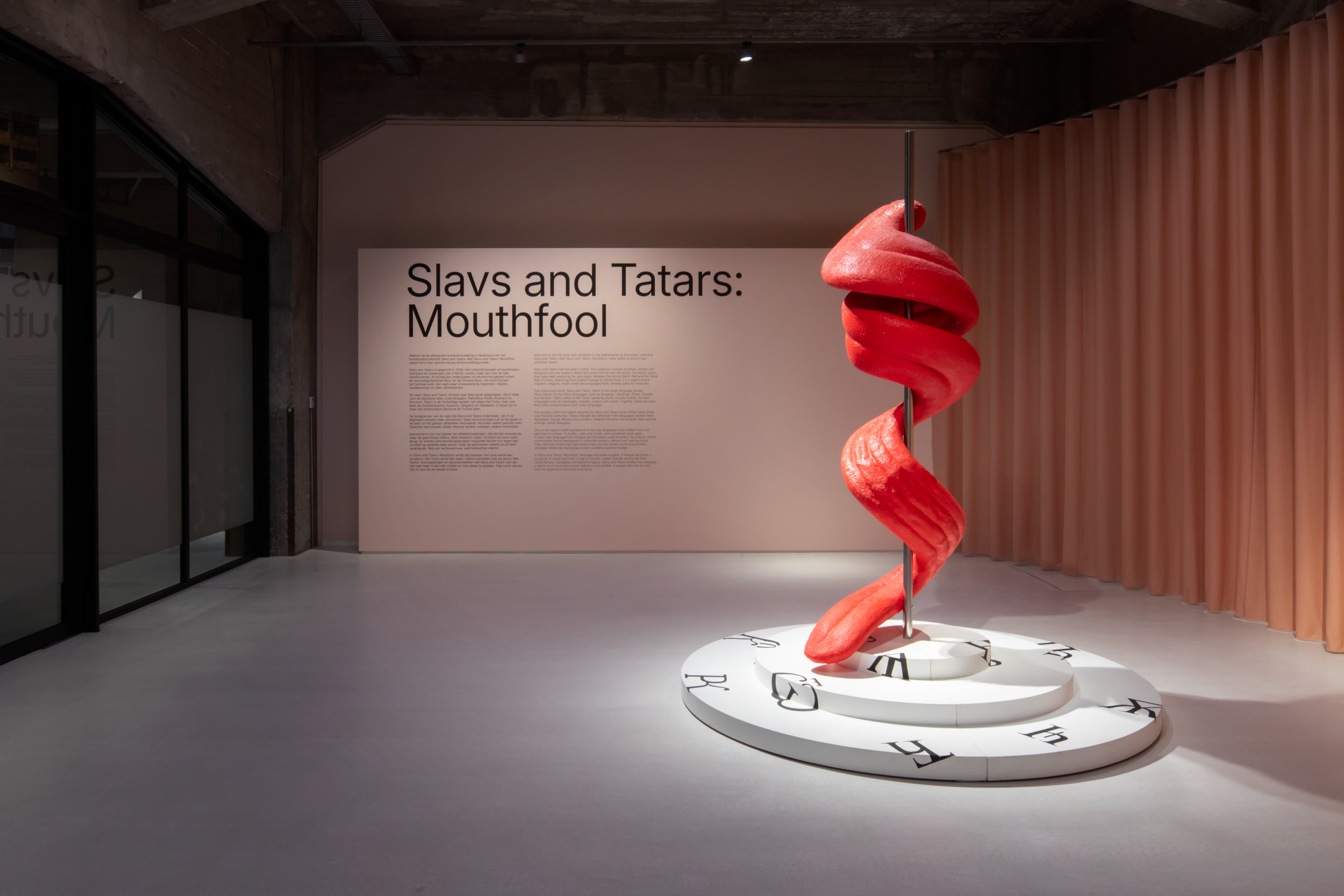
Slavs and Tatars,Tongue Twist Her, 2013, foto: Eddo Hartmann
Fenix, Rotterdam’s new art museum dedicated to migration, launches a new gallery space for temporary exhibitions opening on 19 November 2026 with the work of Berlin-based artists Slavs and Tatars. Mouthfool focuses on the relationship between language and migration, and marks 20 years of the international arts collective.
From flying carpets and pole-dancing tongues, to rapping fruits and swinging prayer beads, Slavs and Tatars’ work is the subject of a solo exhibition for the first time in the Netherlands. The collective tackles subjects like alphabet changes, migration, and faith, approaching these complex subjects with the joy, playfulness and infectious hospitality that are characteristic of their artistic practice. Focused on the area East of the former Berlin Wall and West of the Great Wall of China known as Eurasia, the artists’ chosen region is a hybrid one, in between languages (Turkic, Persian, Arabic, Russian to name a few) and in between empires (Russian, Persian, Ottoman).
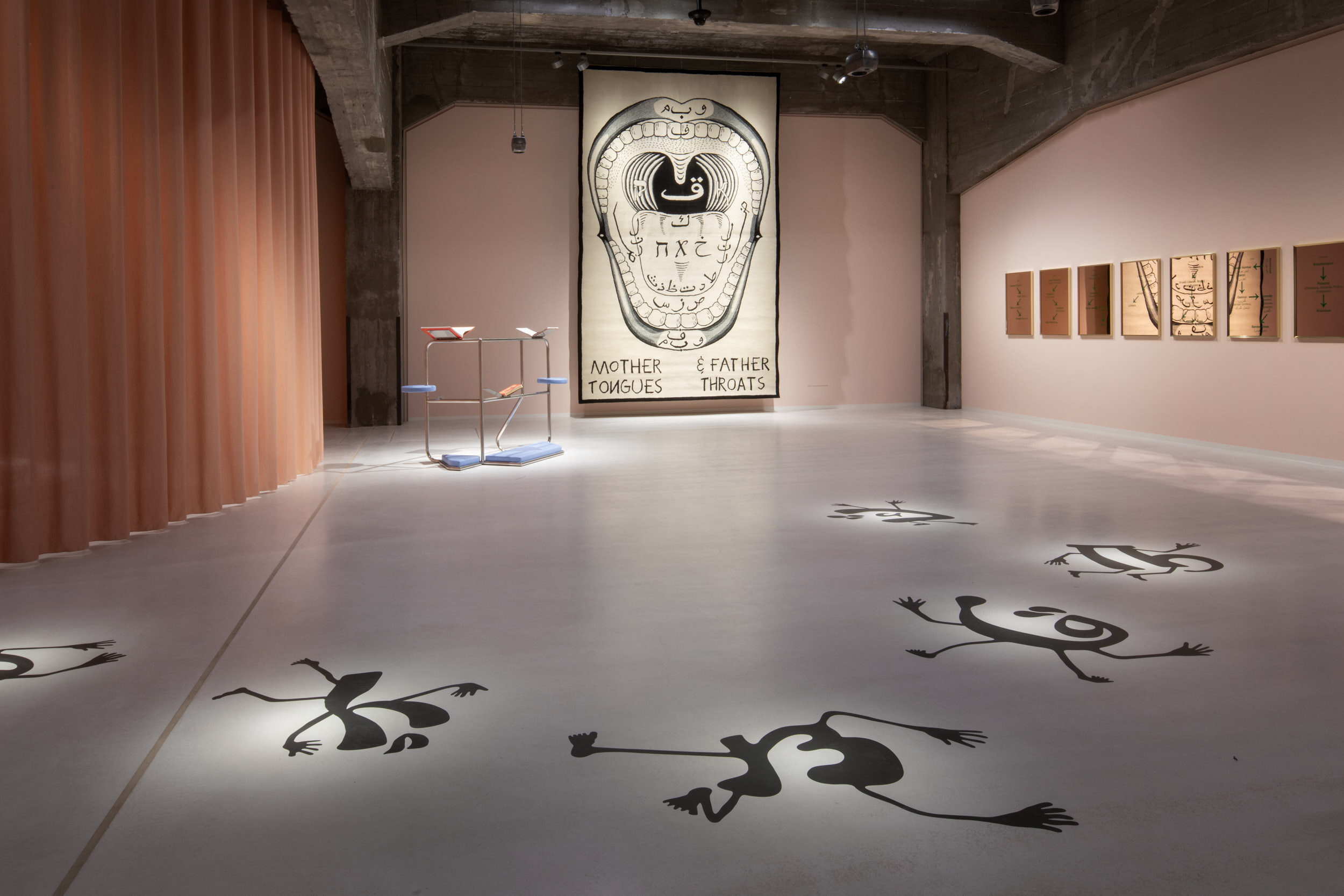
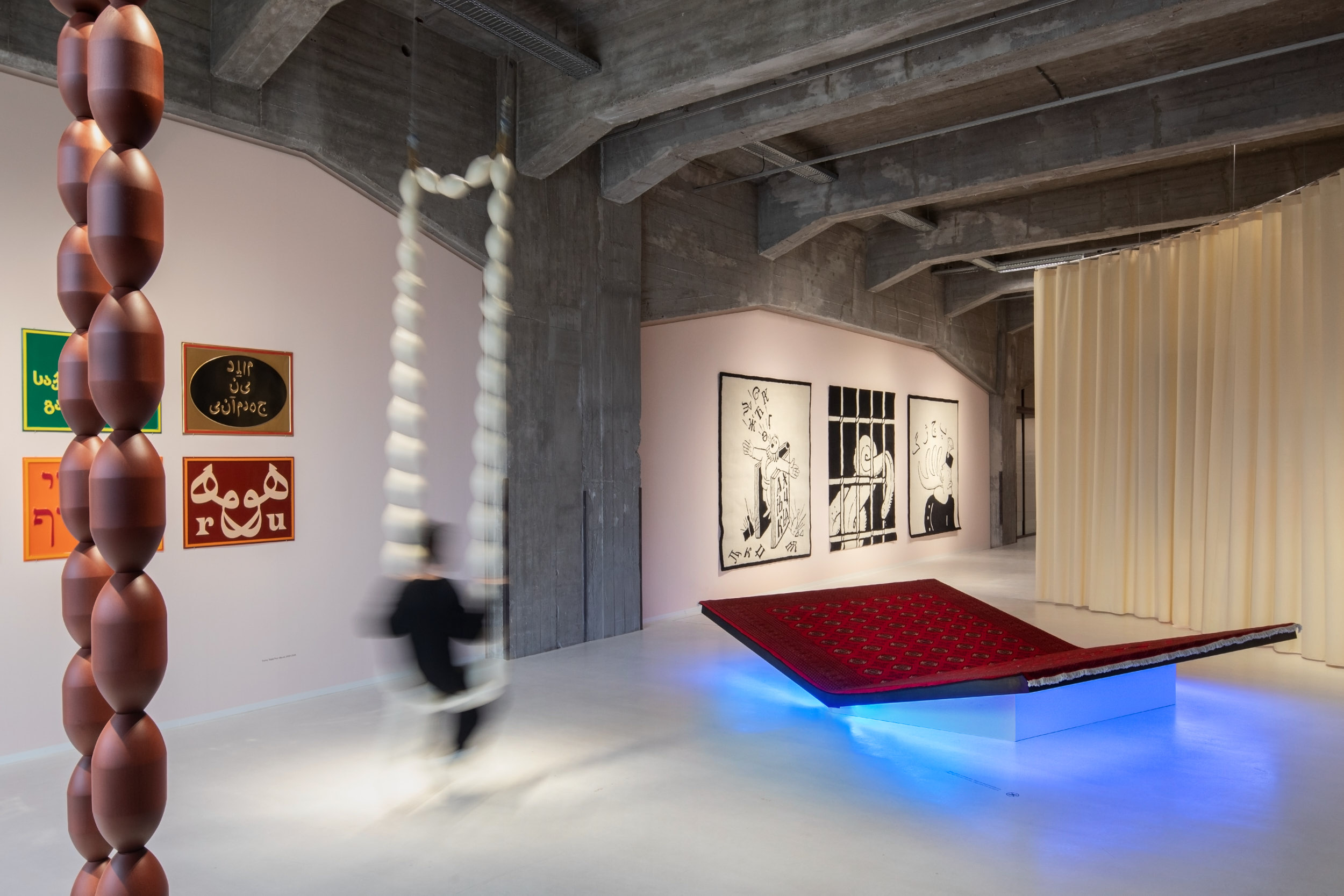
Exhibition overview, Slavs and Tatars: Mouthfool, foto: Eddo Hartmann
Since its inception in 2006, the collective has looked at the region’s histories through the perspective of language, referencing popular culture, oral histories and modern myths. Sculptures, publications, lecture performances, merch, and sound installations are just some of the many media the artists engage to invite us into a world where identity is slippery, languages are sticky, and belief systems are leaky.
In Mouthfool language becomes tangible. The exhibition includes dozens of works from the past twenty years, from a 3-metre-tall tongue wrapping around a dancing pole, to a video of 13 fruit pieces stepping into the arena for a Uyghur rap battle, to ceramic vases with faces made from calligraphic words in Ottoman Turkish. The exhibition explores how language migrates: from mouth to mouth, from one generation to the next. Using humour, wordplay and absurd imagery, Slavs and Tatars reveal that language is about much more than simply talking to one another. It shapes who we are and how we experience the world around us.
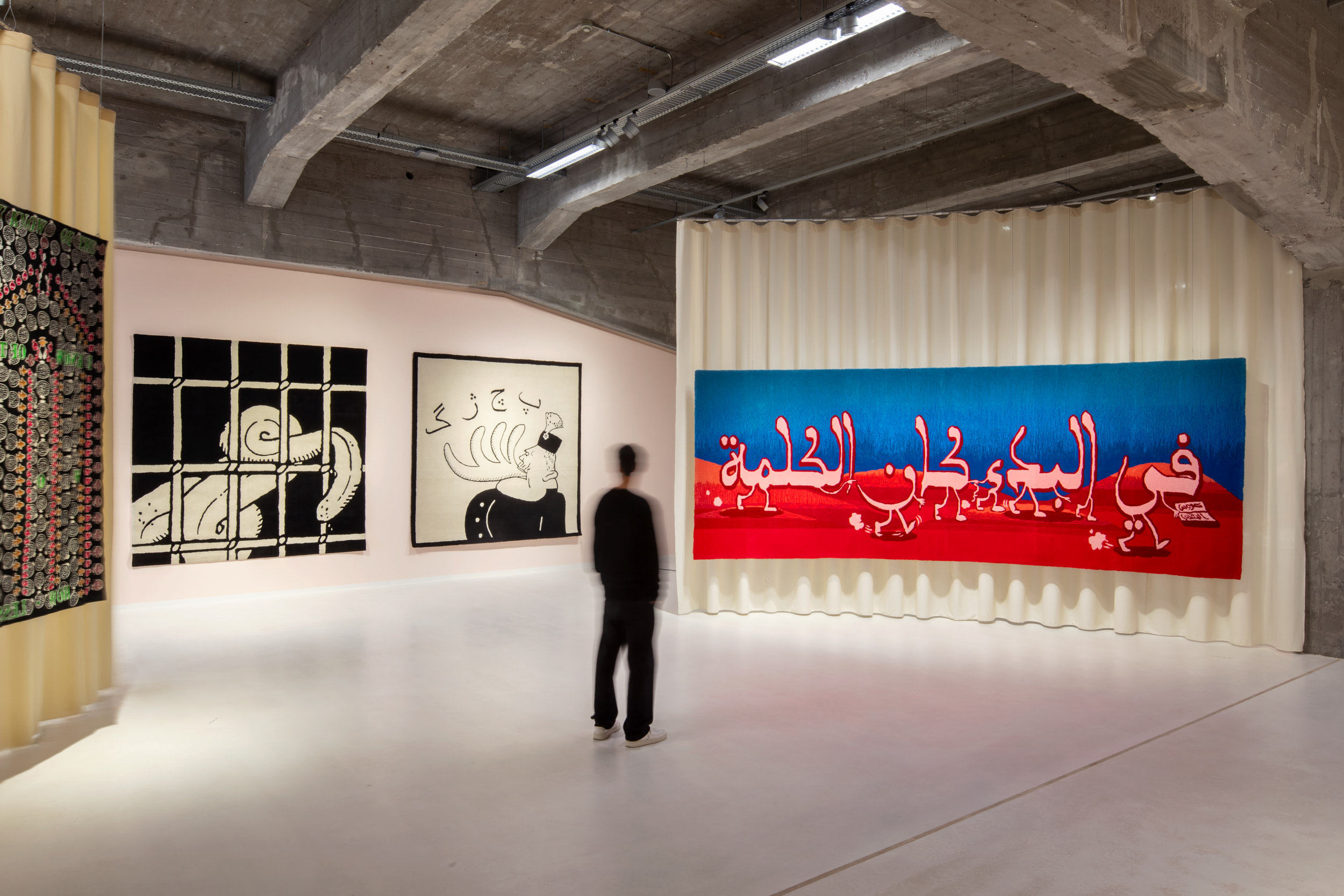
Exhibition overview, Slavs and Tatars: Mouthfool, foto: Eddo Hartmann
Slavs and Tatars said: “We are delighted to celebrate our twentieth anniversary at Fenix and look forward to introducing audiences to the character of Molla Nasreddin, our mascot and the star of a large-scale new work. Like him, we move forward while looking back: our work always begins by unearthing stories, languages and traditions from the past, to show how relevant they are today. As Faulkner said, the past is never dead. It isn’t even past.”
Anne Kremers, Director of Fenix, said: “Following a successful first year, we are thrilled to be expanding Fenix’s artistic programme and cultural offering with this new exhibition space. The powerful, intelligent and often humorous work of Slavs and Tatars is a great way to launch the space, inviting audiences to engage with the themes of language and migration through the lens of art. We look forward to welcoming visitors this autumn.”
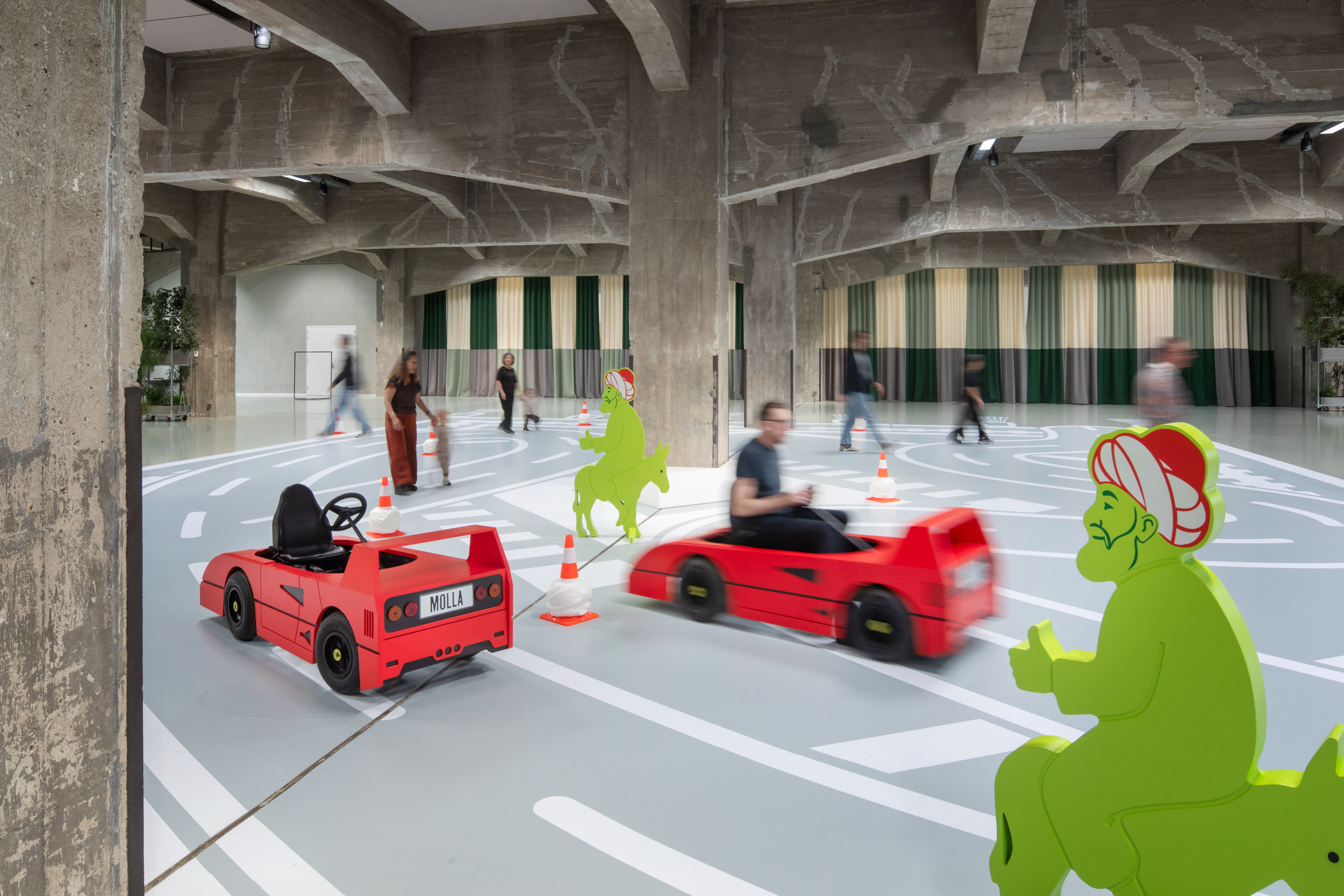
Slavs and Tatars, Molla's Reverse Ride, 2026, foto: Eddo Hartmann
Exhibition highlights include:
Molla’s Reverse Ride (2026)
Inspired by the folk hero Molla Nasreddin, often depicted riding backwards on his donkey, this large-scale public installation invites viewers, adult and kids alike, to trade in the donkey for a race car, but one geared exclusively to drive backwards. Commissioned by Fenix, Molla’s Reverse Ride will take over Plein, the museum’s public indoor city square.
Kitab Kebab (2026): A stack of books pierced by a long metal kebab skewer, the artwork Kitab Kebab asks whether knowledge can be as much digestive as cerebral.
Tongue Twist Her (2013): A 3-metre-tall sculpture of a tongue wrapped around a dance pole. Tongue Twist Her shows how language is never static and clean, but messy and dynamic. The tongue is a slippery smuggler, taking languages across borders.
Azbuka Strikes Back (2026): Between 1927 and 1991, the languages of 25 million peoples across the Soviet Empire changed alphabets once, twice, and sometimes even three times. Azbuka Strikes Back is an audio installation about forgotten sounds that find their voice again, showing how letters can change when they cross borders.
Mother Tongues and Father Throats (2013): A 5-metre tall tufted wool carpet depicting letters of the Arabic alphabet on top of the parts of the mouth used to pronounce them. It shows that language is made by more than the tongue: the throat, the teeth and the lips are just as important.
About Slavs and Tatars
Slavs and Tatars’ work has been the subject of solo exhibitions at esteemed institution across the globe, including the Vienna Secession; MoMA, New York; Salt, Istanbul; Kunsthalle Zurich; Albertinum Dresden, amongst others. Their practice is based on three activities: exhibitions, publications, and lecture-performances. Slavs and Tatars has published some fifteen books to date, including most recently Simurgh Self-Help with JRP|Editions and in 2024 their first children’s book, Azbuka Strikes Back with Walther und Franz König. In an effort to platform other artists, curators, writers, and thinkers from their region, Slavs and Tatars opened Pickle Bar in 2020, a slavic aperitivo bar-cum-performance space a few doors down from their studio in the Moabit district of Berlin and have welcomed nearly 40 participants to their residency and mentorship program for young professionals from the region. Following presentations at institutions including MoMA and Tate Modern, Mouthfool is the first major solo exhibition by Slavs and Tatars in the Netherlands.
About Fenix
Fenix opened in May 2025 and had half a million visitors from over 100 countries in its first year, making it the most visited art museum in Rotterdam. Fenix is located in a restored historic warehouse, which has been transformed in a radical design by Ma Yansong of MAD Architects. The 16,000 sqm building, dating from 1923, was once part of the largest warehouse in the world. Visitors immediately see its architectural masterpiece the Tornado, an organic, dynamic structure evocative of rising air. This double-helix staircase climbs from the ground floor and flows up and out of the rooftop onto a viewing platform hovering above the city.
New gallery space
Slavs and Tatars: Mouthfool is the inaugural exhibition in Fenix’s new 650 sqm gallery space, opening after the success of the museum’s first year. This new space will allow for in-depth exploration and current perspectives on migration, seen through the eyes of contemporary artists. It is located on the ground floor and complements the exhibitions All Directions, The Family of Migrants and The Suitcase Labyrinth.
Listings Information
Slavs and Tatars: Mouthfool
19 November 2026 – 9 May 2027
Fenix, Paul Nijghkade 53072 AT Rotterdam
Tickets from €7.50, free for 18 and under
www.fenix.nl
Notes to Editors
Press Enquiries
The Netherlands Martine Willekens, International Jane Quinn or Lara Delaney, Fenix Bolton & Quinn
pr@fenix jq@boltonquinn.com / lara@boltonquinn.com
+31 6 53600431 +44 (0) 207 221 5000
Related news
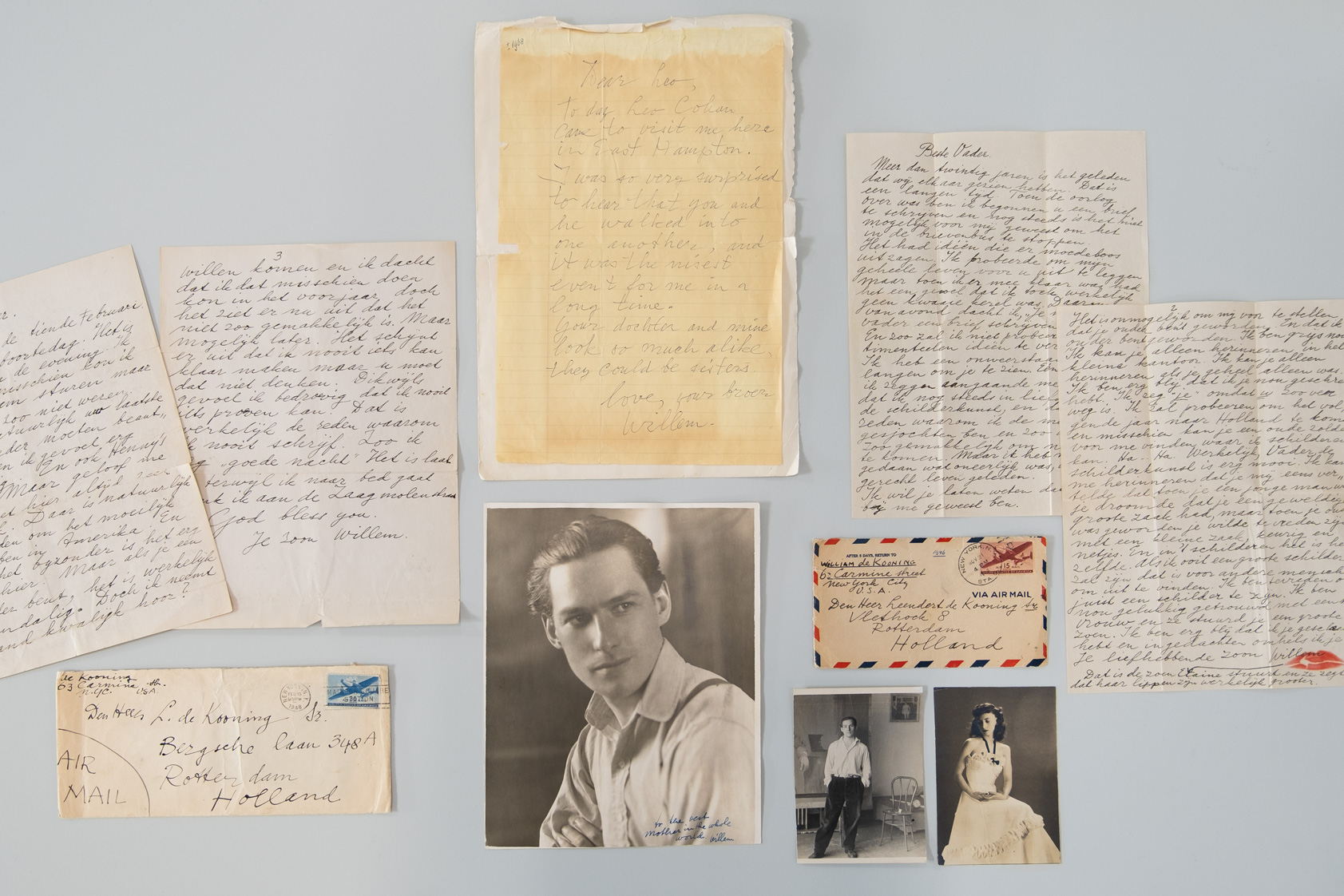
Rare Willem de Kooning letters acquired by Fenix, Rotterdan
Willem de Kooning letters on public display for first time
Read more...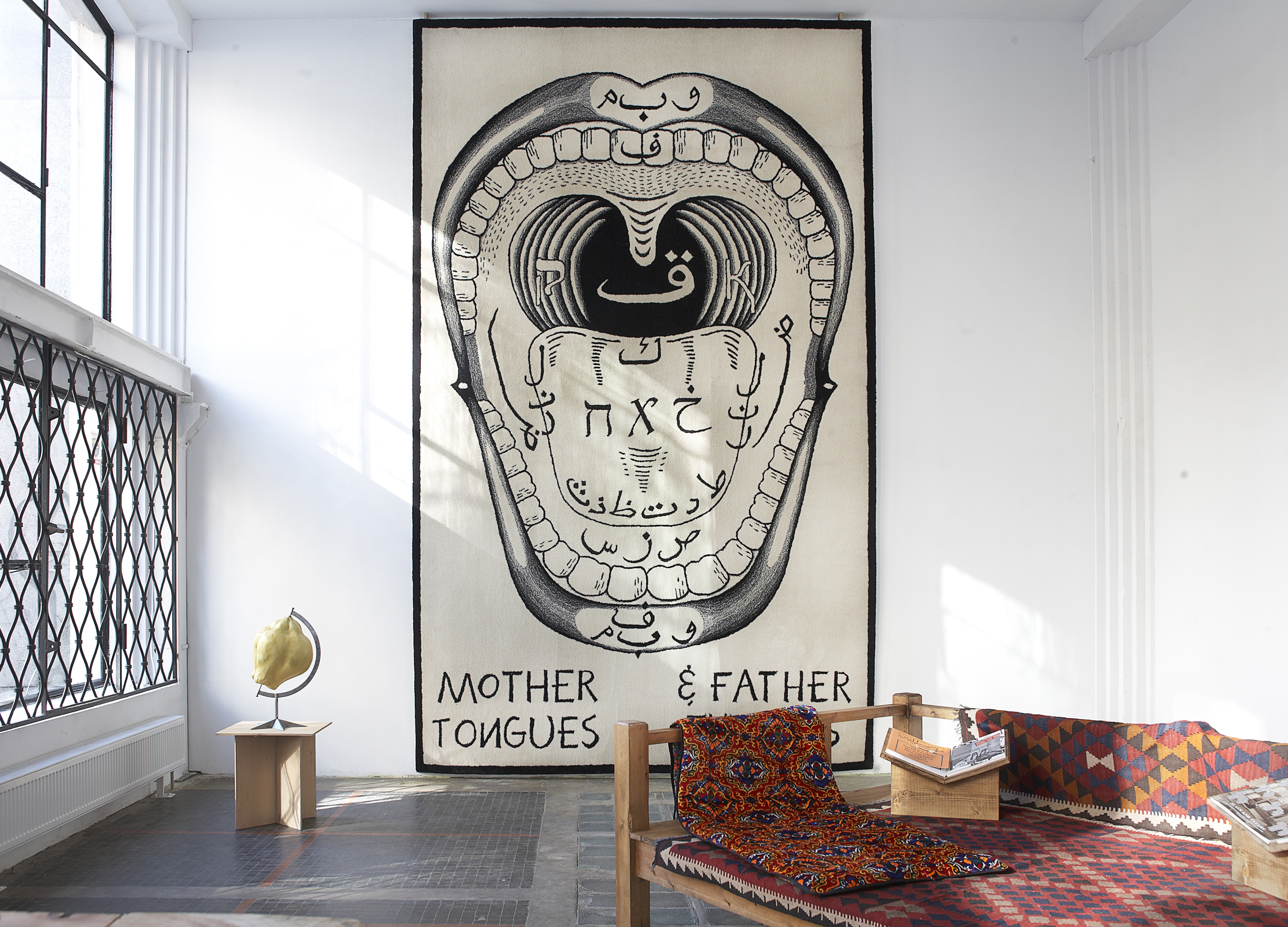
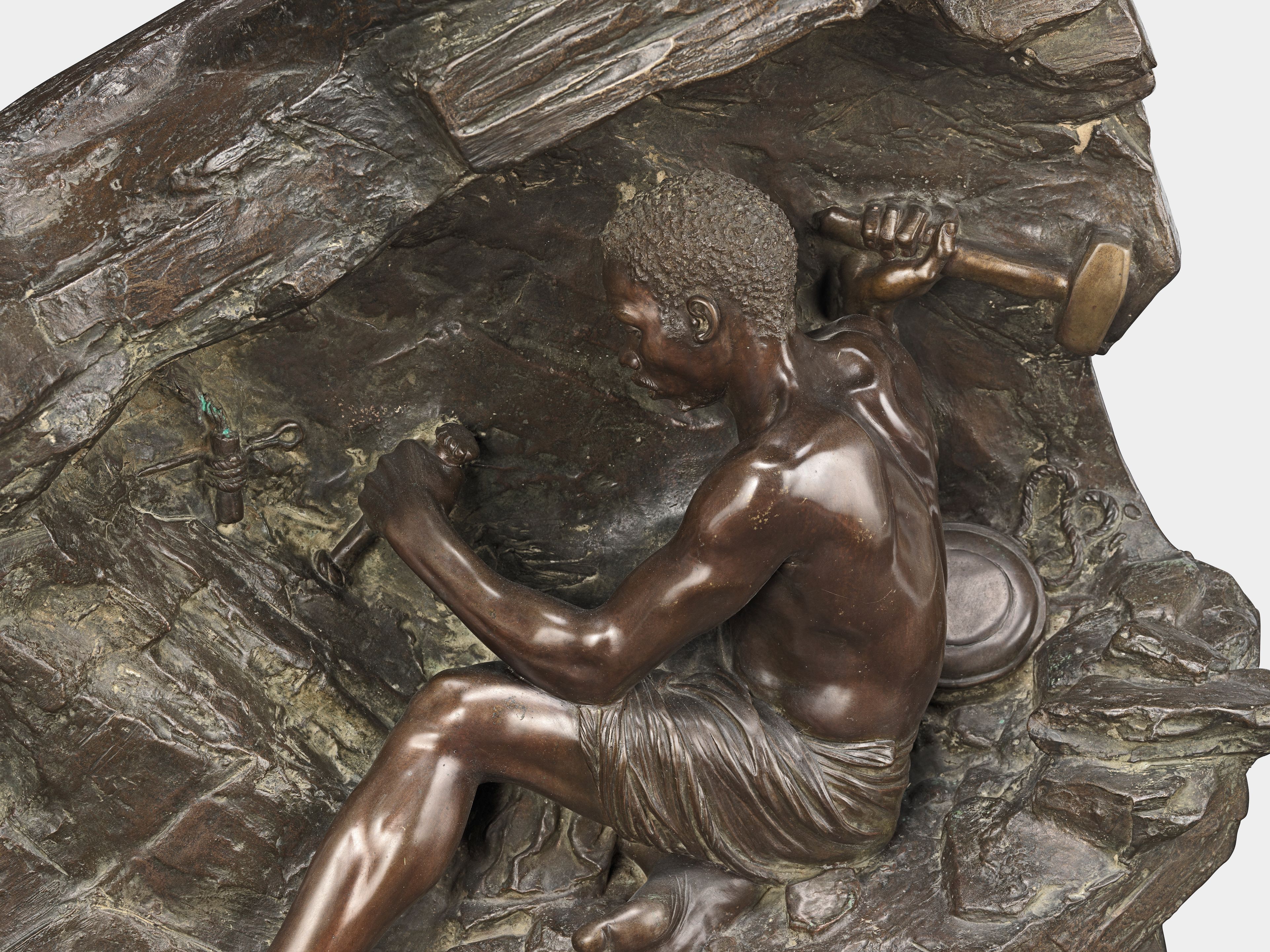
Fenix, the first Dutch art museum to acquire rare sculpture by Anton van Wouw (1862–1945).
The Hammer Worker: an early tribute to the anonymous labour migrant
Read more...