Rare Willem de Kooning letters acquired by Fenix, Rotterdan
Willem de Kooning letters on public display for first time
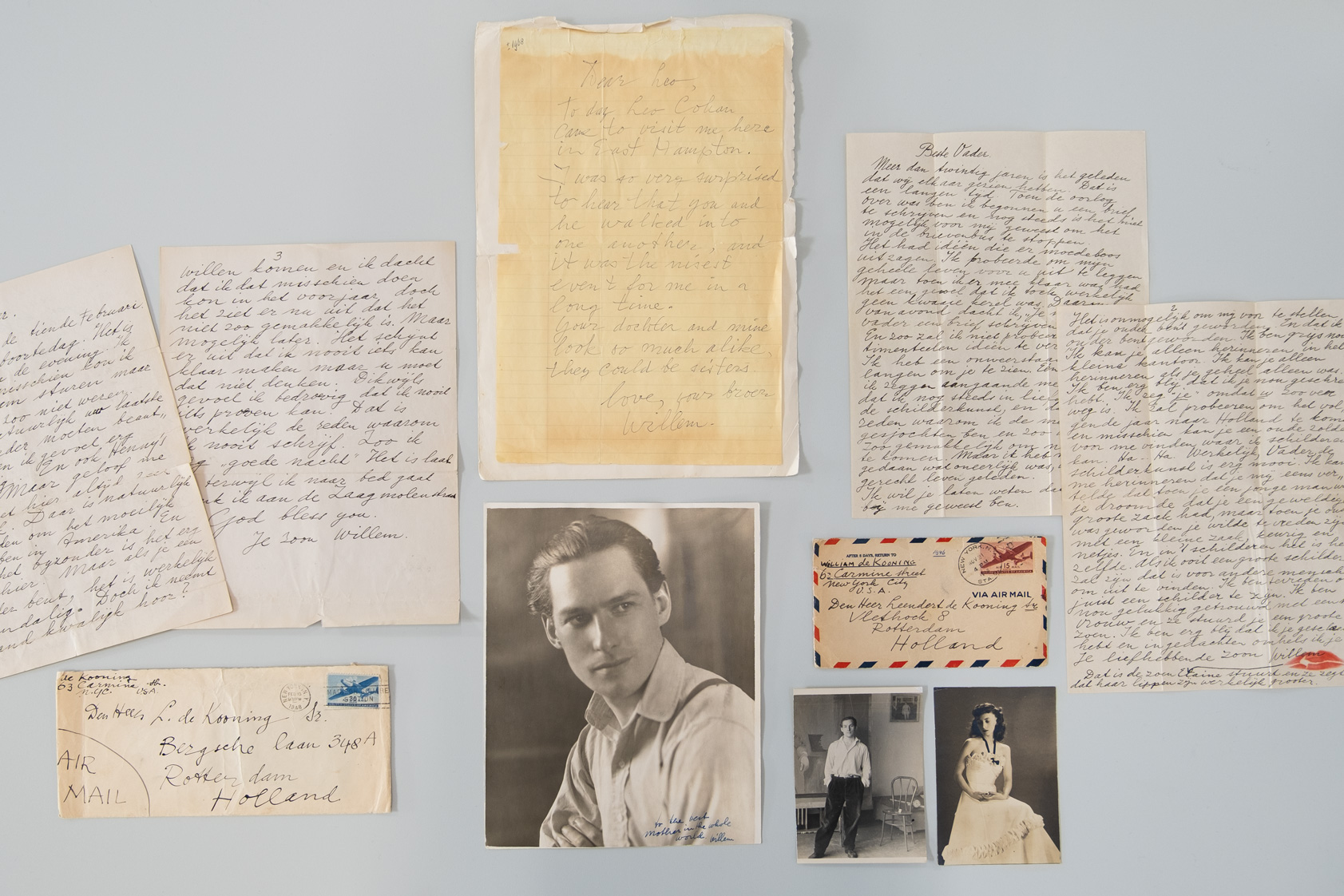
Correspondence from Willem de Kooning to his father from 1948 (left), to his brother from 1968 (center), and to his father from 1946 (right), Photo: Fenix. All quotations by Willem de Kooning © 2026 Estate of Lisa de Kooning
One hundred years after his departure from Rotterdam, Fenix has acquired an exceptionally rare collection of letters and photographs sent by Willem de Kooning to his father and immediate family. The letters have remained in the family’s possession since they were sent, and are going on public display at Fenix for the first time.
Few personal letters from de Kooning to his family are known to exist, making the survival of this correspondence all the more remarkable. In these letters, audiences can encounter not only the world-famous artist, but the son and brother reaching out from the United States to his family in Rotterdam. They offer a rare and intimate glimpse into the artist’s life.
De Kooning (1904–1997) was born in Rotterdam’s Zaagmolenstraat and for many years dreamed of going to the United States. On 18 July 1926, exactly one hundred years ago this year, he left his native city at the age of 22. Without informing his family of his plans, he travelled as a stowaway aboard the SS Shelley to the United States. For a long time, his family heard nothing from him.
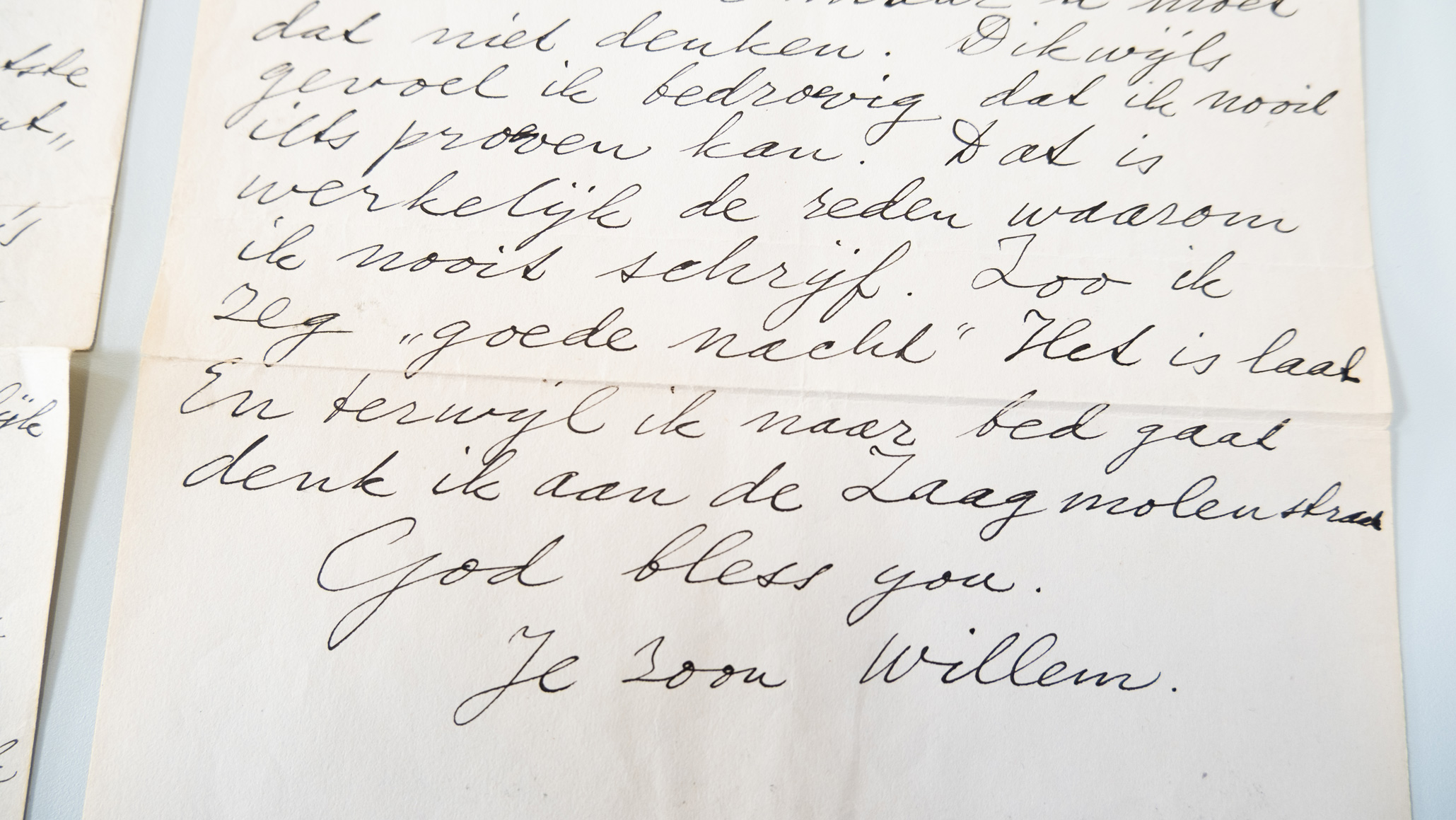
Detail from a letter from Willem de Kooning to his father, 1948, Photo: Fenix
All quotations by Willem de Kooning © 2026 Estate of Lisa de Kooning
In a moving letter to his father from 1948, the year of his breakthrough, his longing for his family and for Rotterdam is palpable. That same year, he had his first solo exhibition in New York and one of his works was acquired by the Museum of Modern Art. He ends the letter with the words: “It is late. And as I go to bed I think of the Zaagmolenstraat. God bless you. Your son Willem.”
The letters add a deeply personal dimension to the story Fenix tells about de Kooning: that of a migrant who built a new life and an international career in New York, while never leaving his family and native city entirely behind.
Anne Kremers, Director of Fenix, said:
“Willem de Kooning’s story is inseparably connected to both Rotterdam and migration. One hundred years after his departure, we can show not only his art, but now also his own words. These letters bring us remarkably close to the person behind the famous artist.”
The letters compliment three sculptures by Willem de Kooning which are on display on the quay in front of Fenix, as well as work in the main collection.
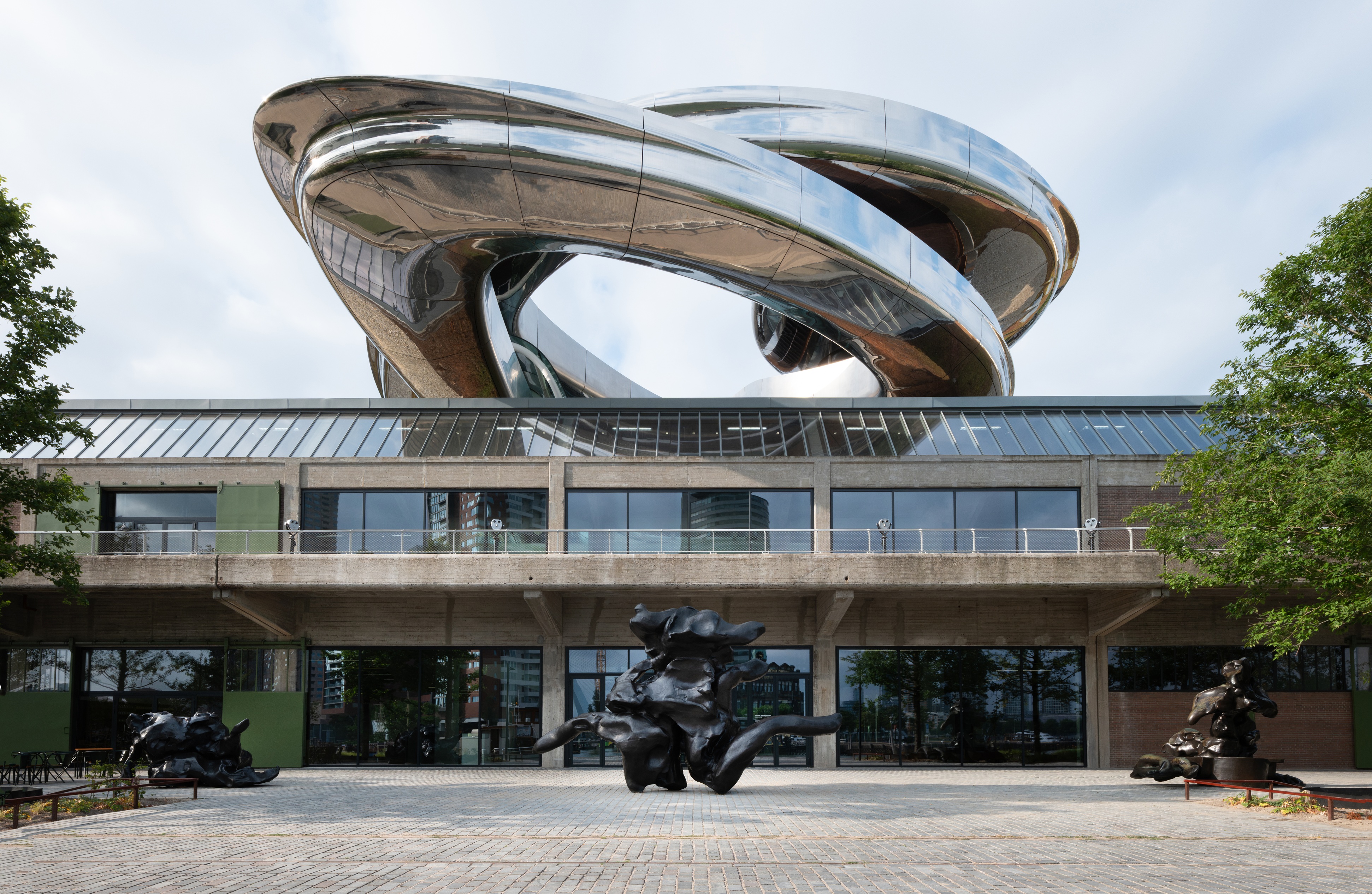
Sculptures by Willem de Kooning on the quay in front of Fenix. Photo: Titia Hahne
Willem de Kooning at Fenix
The permanent presentation includes his painting Man in Wainscott (1969), which is part of Fenix’s collection. On the quay in front of Fenix, three monumental bronze sculptures by de Kooning are temporarily on display: Seated Woman (1969–1981), Standing Figure (1969–1984) and Reclining Figure (1969–1982). In the entrance hall, a smaller version of Standing Figure is also on view, on loan from the ABN AMRO Foundation.
Together, the painting, sculptures and letters bring together different aspects of de Kooning’s life and artistic practice in the very place where his migration story began: Rotterdam.
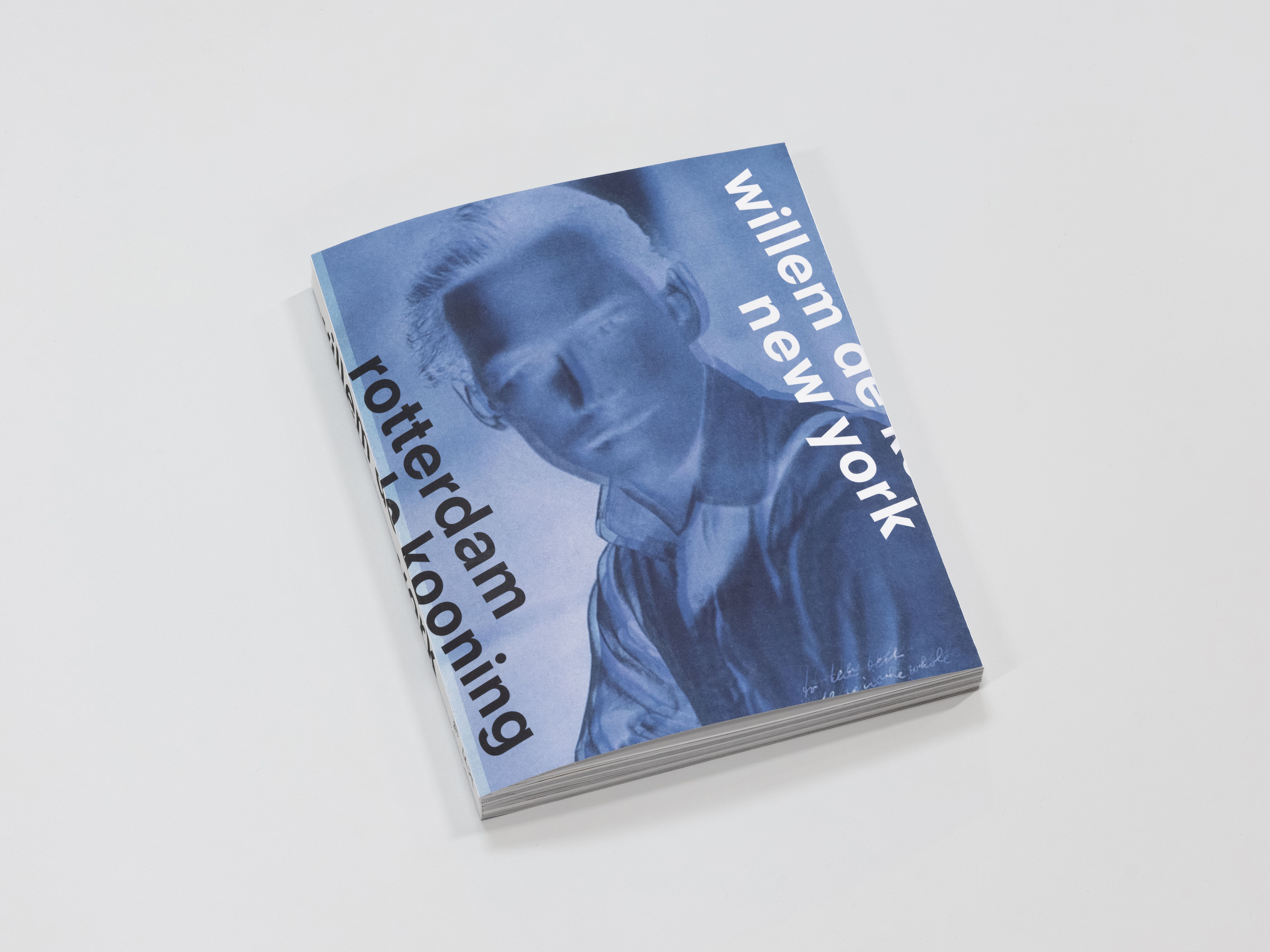
Willem de Kooning Rotterdam New York.
To mark the centenary of de Kooning’s departure, the illustrated publication Willem de Kooning Rotterdam New York has also been published. It portrays the vibrant Rotterdam in which de Kooning grew up and trained as an artist, while also evoking New York in the 1920s, where he began a new life as a migrant.
The book includes contributions by Anne Kremers, Wim Pijbes and Ludo van Halem. It is published by Fenix and nai010 publishers and designed by Irma Boom.
The presentation of the letters coincides with renewed attention for de Kooning in the Netherlands. On 9 October, the Rijksmuseum opened Willem de Kooning at Work, a major exhibition featuring approximately 120 works, developed in collaboration with the Art Institute of Chicago and The Willem de Kooning Foundation in New York.
Note for the editorial team, not for publication:
For additional imagery or interview requests, please contact us at pr@fenix.nl or +31 6 53600431
About Fenix
Fenix is the art museum of migration, housed in a historic harbour warehouse on Rotterdam’s historic departure and arrival quays. Fenix gives space to migration stories from around the world - stories of love and farewell, of coming home and finding belonging. Stories from past and present, told through the work of more than one hundred artists from every direction. Featuring a labyrinth of suitcases filled with stories, photography that takes visitors on a journey, and kitchens that invite the world to be tasted.
Related news
Rare Willem de Kooning letters acquired by Fenix, Rotterdan
Willem de Kooning letters on public display for first time
Read more...
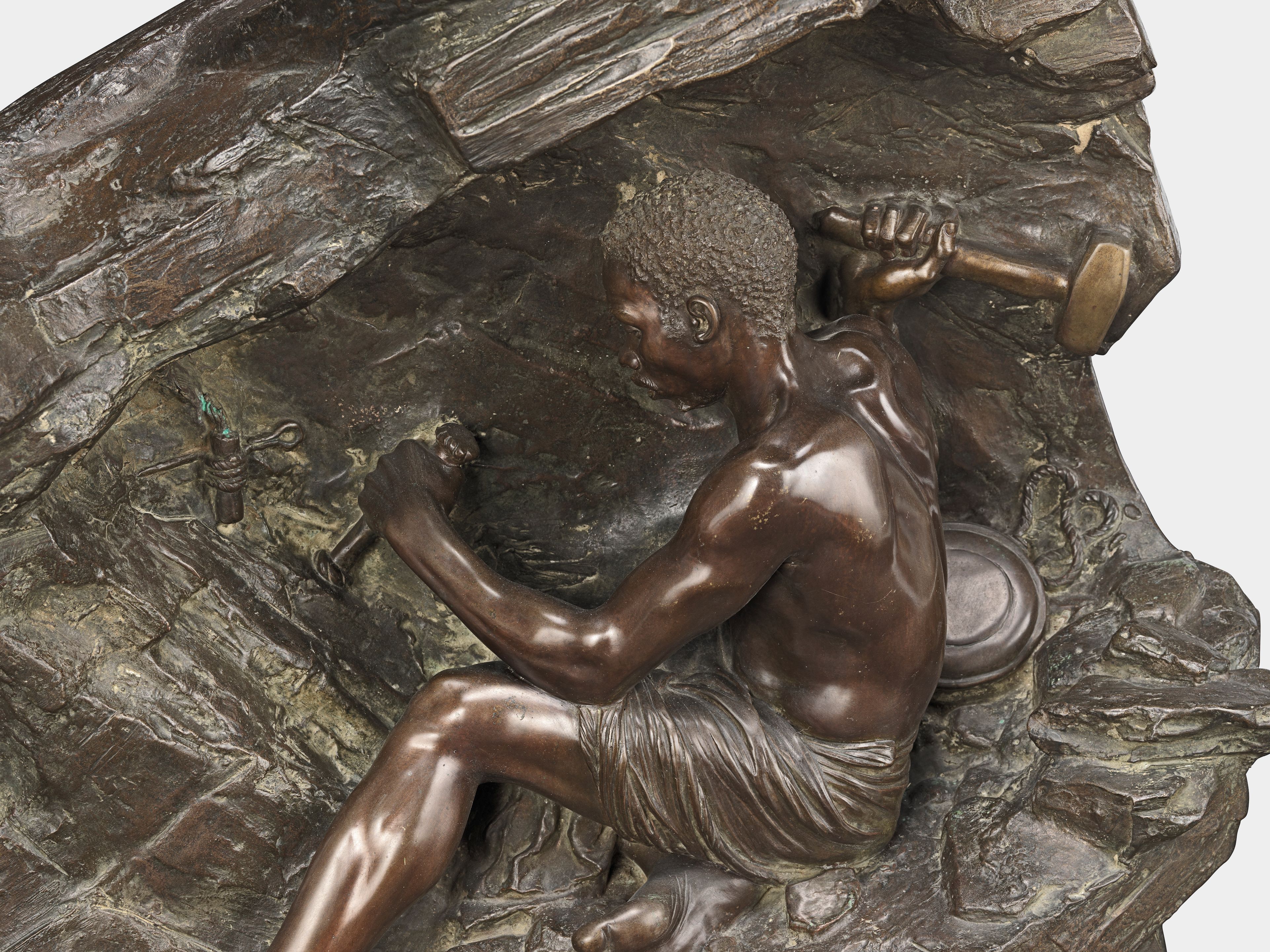
Fenix, the first Dutch art museum to acquire rare sculpture by Anton van Wouw (1862–1945).
The Hammer Worker: an early tribute to the anonymous labour migrant
Read more...